Safe operation during extraction thanks to reliable interface measurement
Determination of the boundary layer position between two immiscible liquids in process plants (decanters, separators, extraction columns, batch or continuous separation).
Basis for automated phase separation and adaptive process control.
Aquasant Industrial Process Measurement Technology
Application in chemical industry, pharmaceuticals, petrochemicals, and food processes with liquid/liquid phases.
Detection of very small changes in phase position in milliseconds.
Interface measurement & interface detection
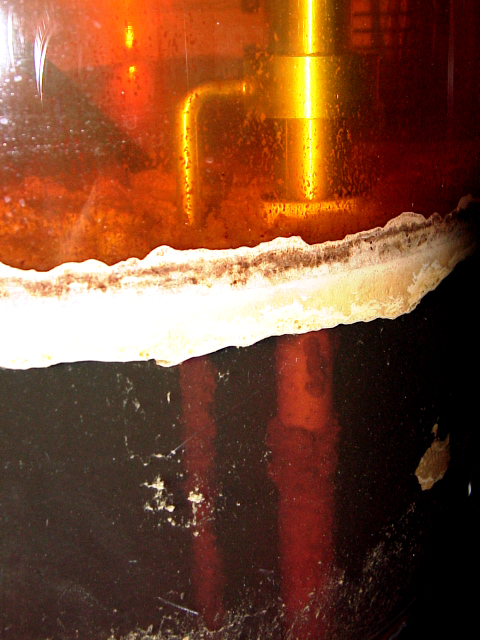
Liquid-liquid separating layers in decanters in the chemical & pharmaceutical industry
These are ubiquitous in the process industry and precise interface measurement is crucial for safe operation. The advancing level of digitalization and automation demands ever better and more accurate, as well as safer, measurement techniques for phase detection.
In the chemical and pharmaceutical industries, as well as in the oil and gas processing industry, high-resolution measuring methods for phase or interface detection are a basic requirement for safe and efficient process control. Contamination and emulsions must not lead to incorrect measurements and product loss. This can have considerable consequences such as unscheduled shutdowns, processing problems in the process and system failures.
What is the impedance interface measurement?
A measuring technique for the local determination of the phase boundary between two liquids via their impedance, conductivity and dielectricity differences.
What is it used for in the chemical and pharmaceutical industries?
For interface control in decanters, separators, extraction plants, batch separations and continuous liquid-liquid processes.
Which liquids can be measured?
All common combinations such as water/organics, WFI/IPA, acids/hydrocarbons, extractants – even with small conductivity differences.
How quickly does the probe react?
Response time < 1 s → ideal for automated control and low-loss phase separation.
Is the technology Ex-certified?
Yes, Aquasant probes are available in Ex ia (ATEX/IECEx) and are suitable for Zone 0/1.
Is calibration necessary?
No. Only one teach setting for light and heavy phase – can be adjusted at any time.
Does the measurement work with foam or turbulence?
Yes, the segmented probe structure stabilizes the signal and filters out foam, gas bubbles and flow fluctuations.
What are the advantages of impedance over floats or differential pressure?
Maintenance-free, no moving parts, independent of density, high accuracy, continuous interface profile.
How is the probe installed in the decanter?
Vertical in the separation chamber; usual positions: Light phase outlet, heavy phase outlet, opposite inlet zone. Length is adapted to the specific project.
Which evaluation devices are suitable?
Mipromex type: MIQ or MIL units with 4-20 mA, switching points and digital signals → compatible with PLC/PCS systems.
Where can I get advice on interface measurement?
The Aquasant service team will be happy to advise you on all aspects of liquid-liquid phase separation; continuous, batch and interface detection for process optimization in the chemical, pharmaceutical, oil & gas and food industries.
Which technology is used for interface measurement?
In many chemical-technical processes, water can be produced as a by-product or extractions are used as a cleaning step or as a wash-out process. The high-resolution impedance measuring systems from aquasant guarantee efficient and automated interface detection. Customized systems meet your requirements even under extreme conditions in continuous or batch processes. To achieve the desired result and clean phase separation, we adapt our products individually and optimally to your processes.
Functional principle of impedance measurement
Precision in measurement – differentiation of liquid phases
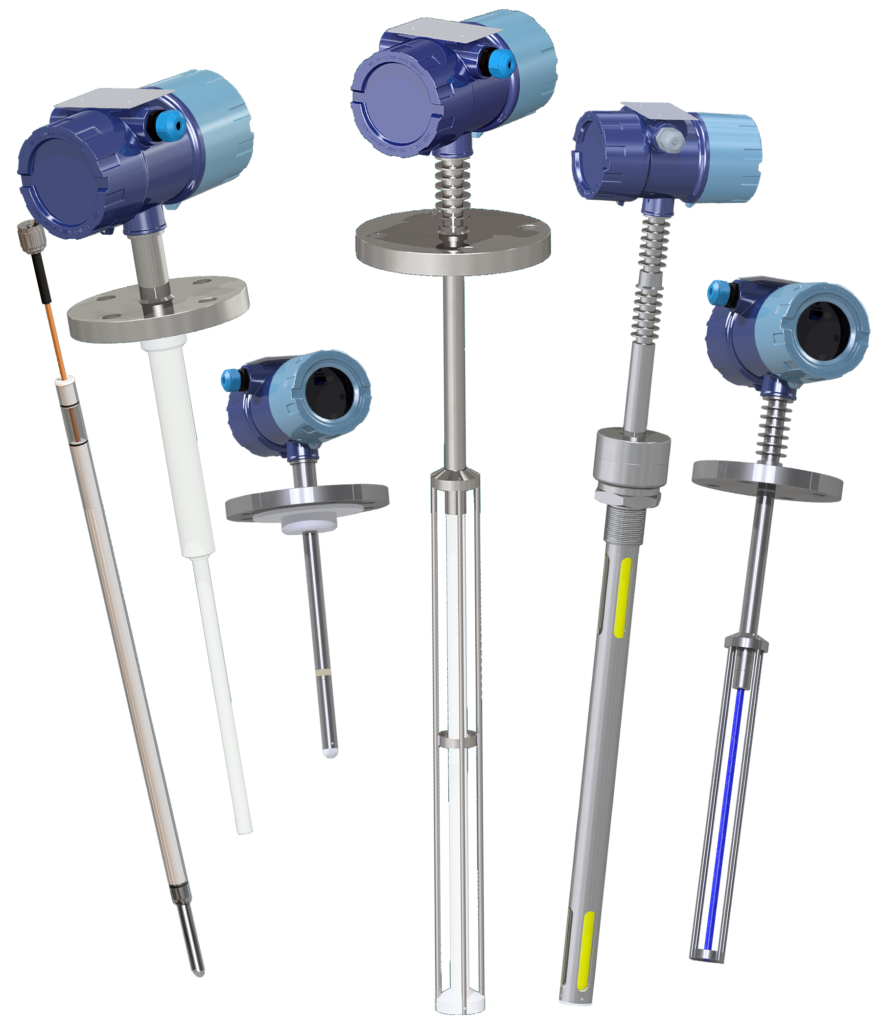
Different media have different measured impedance values. Upper and lower phases are measured. The measured value of the upper phase is stored as the zero point of the active electrode area. The STMd interface rod probes use state-of-the-art measurement technologies to accurately determine the impedance, conductivity and dielectric constant (DK) as a sum signal of your process media. These precise measurements make it possible to accurately identify and differentiate between different liquid interfaces – from insulating to highly conductive substances. This gives you valuable insights into your processes and allows you to continuously optimize the efficiency and quality of your phase separation.
We will be happy to advise you on our products and support you from feasibility to planning and commissioning of your interface measurement systems.
Batch process for interface measurement
Die Trennschichtmessung überwacht die Impedanz innerhalb der Messstrecke auf kleinste Veränderungen innerhalb weniger Millisekunden. Die Ansteuerung des Abtrennventils erfolgt mittels automatischer adaptiver Trennschichtüberwachung, über ein Relais-Umschaltkontakt. Die Trennschichtdetektion reagiert auf eine Empfindlichkeit von 0.002% (ab 6 von 3000 Impulsen). Oder/und wird das 4-20mA Analogsignal an das Prozessleitsystem übertragen.
Installing the pipe probe
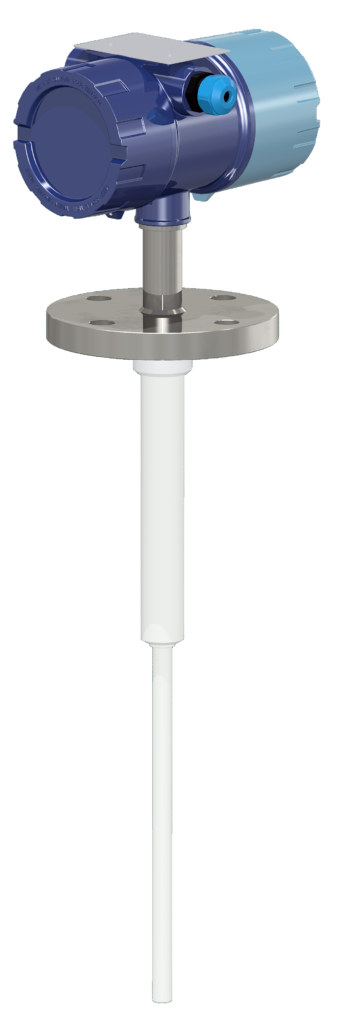
The type TSS80 pipe probe, with a seal-free PTFE body, is flanged into the pipe directly after the bottom valve but before the separating valve. The free passage in the pipe probe prevents turbulence from the flowing product. The system is supplied with “plug & process technology” (PPT) so that the interface systems are ready for use without time-consuming commissioning. After the separation process, the emptying of the pipe can also be detected.
Technical data pipe probe
Temperature
Print
Measuring range
Conductivity
Integration time
-20 .. 170 °C
0.1 .. 16 bar /150lbs
DK >1.8
0..4000 µS/cm
0- 400ms
Continuous process for interface measurement
In kontinuierlichen Prozessen, in denen verschiedene Flüssigkeiten oder Phasen getrennt werden müssen, kommen oft Mixer-Settler und stehende oder liegende Abscheider zum Einsatz. Diese Geräte spielen eine entscheidende Rolle bei der Trennung und Reinigung von Flüssigkeiten, die Aquasant Trennschicht-Stabsonde Niveaumessung unterstützt eine präzise Steuerung des Prozesses.
Continuous monitoring of interface height can be extremely challenging due to complex process conditions. The automation of interface measurements in the event of phase inversion, contamination or emulsion layers can lead to problems in continuous systems. However, reliable and continuous interface measurement is the basis for phase separation in continuous processes for efficient operation.
How does a liquid-liquid interface measurement work?
The Aquasant impedance probes continuously record the position of the interface and supply the corresponding data to the process control system. This data is processed in real time to monitor the current status of the process. The interface measurement principle with the impedance measurement system is not based on a transit time measurement, but on the difference between the two phases to be measured. This also enables precise measurement in the event of a phase reversal when the aqueous phase floats to the top. The process control system can use the information from the interface measurement to actively control the position of the interface. This can include, for example, adjusting pump speeds, valve openings or other process parameters to keep the interface in the desired position.
Technical data rod probe
Temperature
Print
Measuring range
Conductivity
Integration time
-20 .. 300 °C
0.1 .. 40 bar /300lbs
DK >1.8
0..50 µS/cm
0- 400ms
With the aquasant™ interface measurement systems, you get an exact measurement – even under difficult conditions.
“Learn more about precise interface measurement and optimize your phase separation with Aquasant probes. Contact us now for an individual consultation and maximize the efficiency of your chemical processes.”
The multi-talented MIQ can be used for everything from interface level measurement to batch separation with a pipe probe. With the option of a 2nd measuring circuit, phase monitoring, the fill level or the separation behavior can be measured. The evaluation electronics not only serve as a power supply unit in 2-wire technology, but also contain the intelligence for data processing. Your advantage: High cost-effectiveness and investment security thanks to a long service life.
Universally applicable, reduced storage costs
With 1 or 2 measuring inputs
Fault visualization, fault messages can be set to analogue output
Continuous interface monitoring
Phase monitoring for safety-optimized separation
Combination with level measurement of the upper phase
Ex version: Gas II (2) G [Ex ia Gb] IIC SEV 09 ATEX 0132; EMC STS 024 CE 1254
Um dir ein optimales Erlebnis zu bieten, verwenden wir Technologien wie Cookies, um Geräteinformationen zu speichern und/oder darauf zuzugreifen. Wenn du diesen Technologien zustimmst, können wir Daten wie das Surfverhalten oder eindeutige IDs auf dieser Website verarbeiten. Wenn du deine Zustimmung nicht erteilst oder zurückziehst, können bestimmte Merkmale und Funktionen beeinträchtigt werden.
Funktional
Always active
Die technische Speicherung oder der Zugang ist unbedingt erforderlich für den rechtmäßigen Zweck, die Nutzung eines bestimmten Dienstes zu ermöglichen, der vom Teilnehmer oder Nutzer ausdrücklich gewünscht wird, oder für den alleinigen Zweck, die Übertragung einer Nachricht über ein elektronisches Kommunikationsnetz durchzuführen.
Vorlieben
Die technische Speicherung oder der Zugriff ist für den rechtmäßigen Zweck der Speicherung von Präferenzen erforderlich, die nicht vom Abonnenten oder Benutzer angefordert wurden.
Statistiken
Die technische Speicherung oder der Zugriff, der ausschließlich zu statistischen Zwecken erfolgt.Die technische Speicherung oder der Zugriff, der ausschließlich zu anonymen statistischen Zwecken verwendet wird. Ohne eine Vorladung, die freiwillige Zustimmung deines Internetdienstanbieters oder zusätzliche Aufzeichnungen von Dritten können die zu diesem Zweck gespeicherten oder abgerufenen Informationen allein in der Regel nicht dazu verwendet werden, dich zu identifizieren.
Marketing
Die technische Speicherung oder der Zugriff ist erforderlich, um Nutzerprofile zu erstellen, um Werbung zu versenden oder um den Nutzer auf einer Website oder über mehrere Websites hinweg zu ähnlichen Marketingzwecken zu verfolgen.